- Photo editing
- Sep 01, 2025
Designing for Trust: 5 Ways to Make Visitors Confident Enough to Click ‘Buy’ + Examples
How do people decide what brands to buy from? Research consistently shows that they make their shopping decisions based on whether they trust a brand to fulfill its promises.
According to consumer behavior research, brand confidence consistently ranks among the top factors influencing purchase decisions.
For instance, Edelman’s 2025 Trust and Brands special report found that trust is equal to price and quality when influencing purchases. Moreover, a Gartner survey discovered that 81% of people wouldn’t engage with businesses they don’t perceive as dependable. And, perhaps most importantly, Adobe discovered that 7 in 10 people buy more from trustworthy brands, showing just how crucial brand perception is for long-term growth and success.
But while there’s plenty you can do, from a branding standpoint, to encourage your target audience to put faith in your brand, the simple truth is that web design also impacts credibility. That’s why designing for trust is so essential.
Without further ado, the following are the top ways to make visitors confident enough to click the ‘buy’ button by investing in trust-elevating web design. Let’s get into it.
High-Performing UX Design
Visual design is super powerful. But no matter how aesthetically pleasing your website looks, it won’t instill confidence in visitors unless it provides an enjoyable user experience.
That’s why your UX design strategies must prioritize performance and ease of use.
The great thing about this trust-elevating design tactic is that it’s not that difficult to implement (nor does it differ in any way from the UX best practices you should incorporate into your design decisions).
In addition to prioritizing site speed and mobile responsiveness, pay attention to the following UX factors as well:
- Emphasized site security — especially during checkout — can make shoppers feel more confident and prevent them from abandoning their carts due to a lack of brand trust.
- Easy navigation and informational hierarchy make it easier for consumers to discover your solutions, increasing their chances of perceiving your online store as well-organized and, consequently, trustworthy.
- Prioritize site accessibility. Most websites fail to meet basic accessibility standards. Although this doesn’t necessarily impact trust, it does make your website less usable and therefore less likely to convert visitors into customers.
- Consistent visual design and branding elements. Consistency breeds familiarity, which is a prerequisite for inspiring conversions. Research suggests that 73% of people are more likely to trust brands they already know. Maintaining that visual consistency across product images, banners, and social media assets is much easier when you use free image tools to quickly resize, compress, or refine visuals without relying on a full design team
- Minimal errors. Usability errors diminish brand trust and confidence. By preventing them wherever possible, you can easily reduce the likelihood of losing your visitors’ trust due to an unforeseen design mistake.
- Transparent pricing. 39% of shoppers will abandon their carts if they encounter high extra costs during the checkout phase. To encourage them to follow through with their purchases, be transparent with your pricing strategies.
Highly-Visible, Hyper-Relevant Social Proof
One of the most effective design tactics to elevate brand trust is to prove that your company has been recognized for its high-quality solutions. The best way to do this? Hyper-relevant social proof.
Ultimately, social proof isn’t just an extra step you take to maximize credibility and foster trust. According to research, it’s a crucial component of the modern buyer’s journey.
PowerReviews found that 99.5% of shoppers consult testimonials before making a purchase decision. More importantly, 45% of consumers won’t even consider buying a product if it doesn’t have any reviews.
But how do you incorporate social proof into your web design in a way that makes visitors confident to click the ‘buy’ button?
Well, there are a couple of effective tactics.
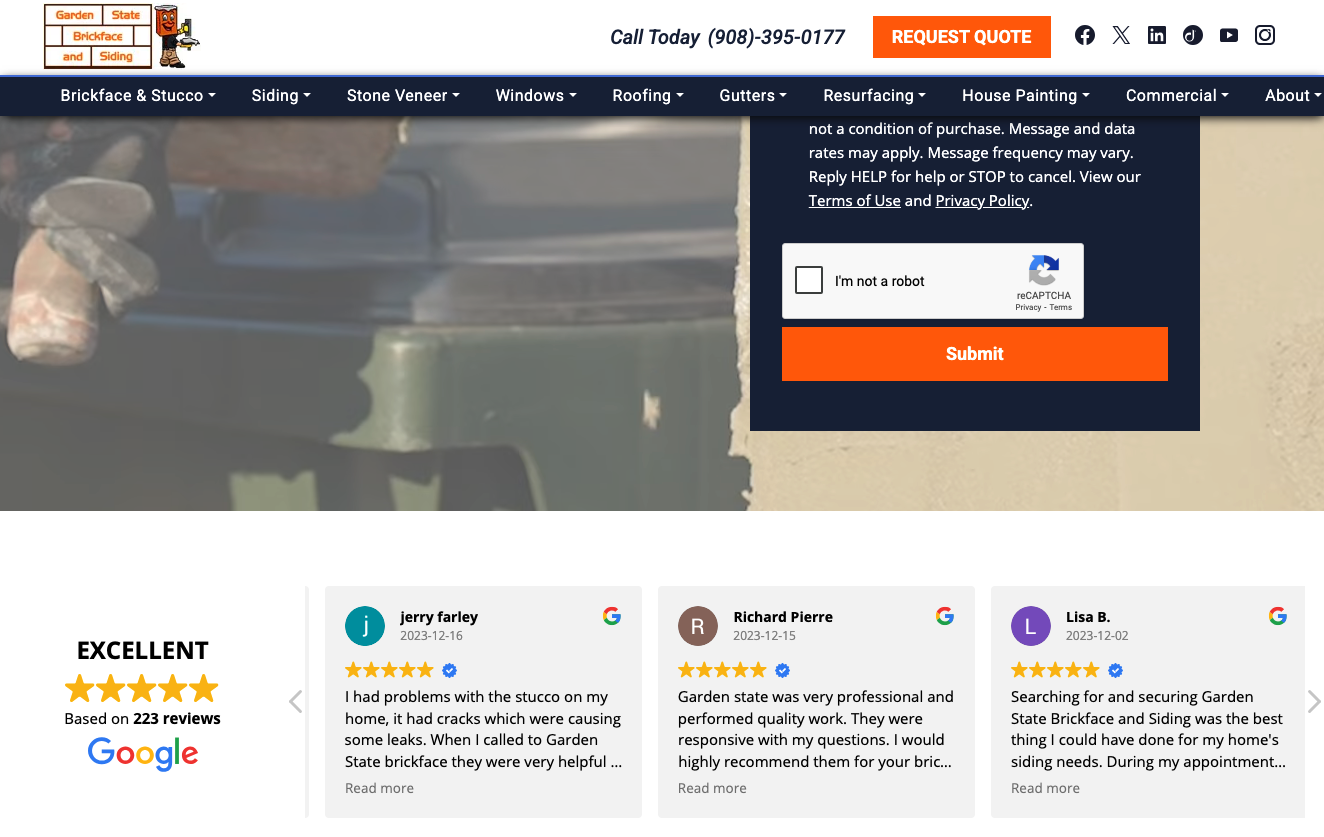
For starters, always support your value propositions with customer feedback that reinforces your promises. This can be as easy as embedding reviews from third-party websites below the hero section of your website. A good example of this in action comes from Brickface, a New Jersey based exterior home improvement Contractor.
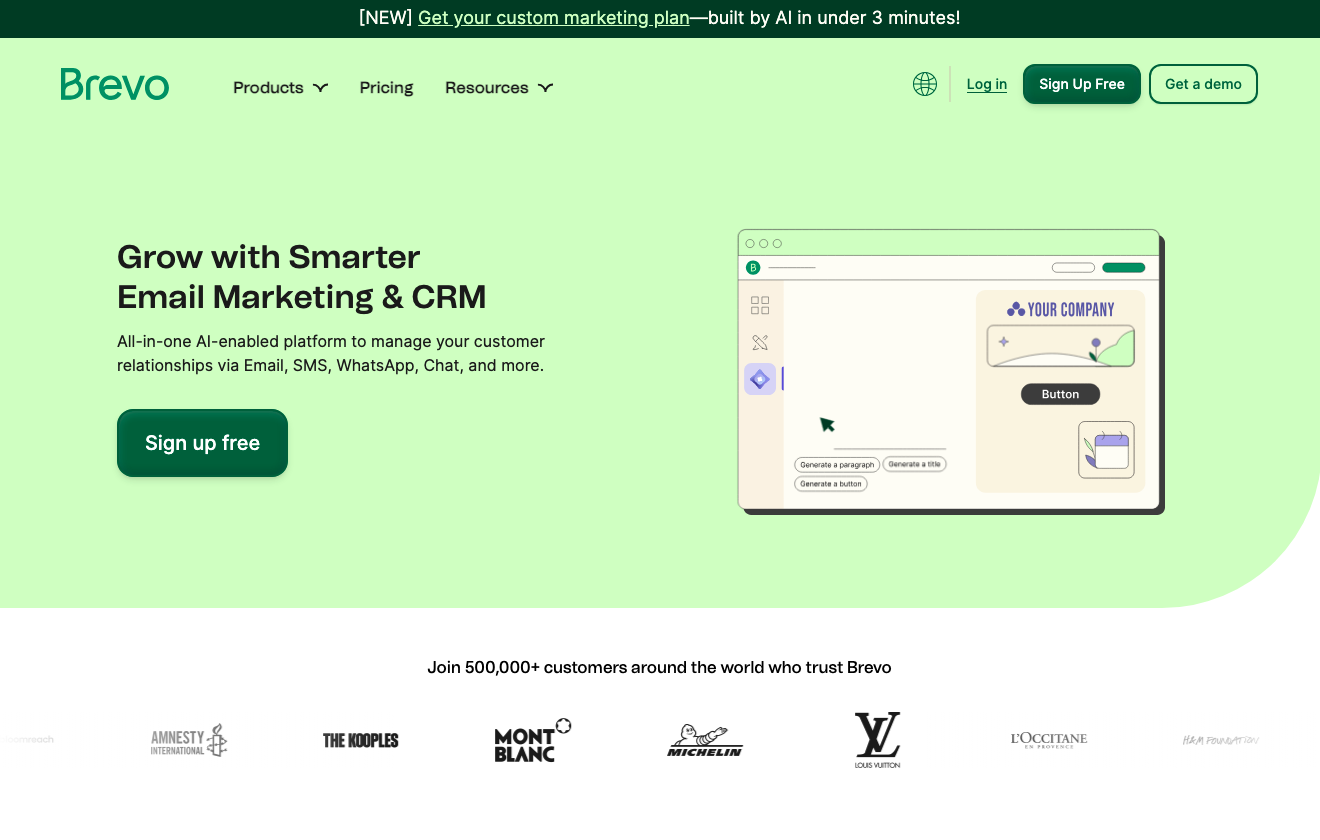
Alternatively, you could go a step further and highlight customer logos, brand awards, or relevant certifications. This is especially popular among SaaS brands, like Brevo, as it emphasizes the genuine effectiveness of their solutions in an industry where brand trust is paramount for winning over clients.
Additionally, remember that branded content — no matter how high-quality it is — will never be perceived as authentic and as trustworthy as third-party evidence of your company’s competence. So, explore ways to incorporate third-party resources into your trust-building design strategy.
For instance, user-generated content — like that used by Cluse — is an excellent tactic to inject authenticity and credibility into your website.
Or, you could take the extra effort needed to produce in-depth social proof and showcase detailed case studies in prime spots throughout your website. That’s what businesses like Small Town Folk do to earn web visitors’ trust.
Risk-Free Sales Funnel Entry
As you explore tactics to make visitors confident enough to click the ‘buy’ button on your website, start by considering potential reasons they don’t feel comfortable converting with your brand.
One of the most common reasons is that the idea of a conversion seems too risky to your audience. Sure, your prospects may like your offer. However, if they’re not 100% convinced that they’ll be satisfied post-purchase, they’re likely to have some doubts.
So, consider methods to reduce your audience’s perception of risk when inviting them to convert.
One of the most effective design tactics for this is placing trust-building microcopy near your primary conversion elements.
For instance, check out Article’s product pages. You’ll see that the area below the main CTA button features trust-building microcopy, namely the statement that each purchase comes with a 30-day satisfaction guarantee.
Or, if you know that your target audience goes through a more complex sales cycle before deciding to click the ‘buy’ button, why not encourage them to enter your funnel by pointing out that it’s risk-free?
The GetSafe Medical Alert Systems landing page features two distinct trust-inspiring elements that aim to facilitate conversions. On the one hand, the primary CTA itself invites shoppers to “try risk-free for 30 days.” On the other hand, the site also includes a toll-free contact number and a live chat option. Both encourage potential customers to get in touch and ask questions without committing to a purchase they’re not yet sure about.
Finally, if you have a strong understanding of your target audience’s wants and needs, it’s always a good idea to use that information to show that buying from your business isn’t an action they’ll regret in the future.
For instance, Aksla understands that its customers want the best value for money. However, it also knows that shoppers hate spending more money than necessary. So, to reduce customer risk and encourage conversions, it utilizes microcopy to highlight the lowest price over the last 30 days, effectively showing potential customers that they aren’t being swindled by converting immediately instead of waiting for a discount.
Earn Consumer Trust Through Education
Did you know that, after reading educational branded content, consumers are 131% more likely to convert?
One way to explain this is to emphasize that stronger product understanding automatically increases purchase intent.
Educational resources inspire conversions because they effectively demonstrate the value your solutions offer. On top of that, they work because they’re a tangible piece of evidence that your brand genuinely cares about empowering customers to make the right purchase decisions, even if it potentially means losing a sale.
So, knowing that brand benevolence automatically breeds trust, consider incorporating educational elements into your website design.
For example, you can do something similar to what Brain Ritual, migraine prevention supplement, does on their Learn page. Here, the business summarizes the scientific evidence backing the effectiveness of its product. Additionally, it includes an extensive References section on the page, helping visitors verify any of the claims, empowering them to make a more informed purchase decision.
Alternatively, you could accomplish similar outcomes with video. This format is people’s favorite way to learn about products and services, and it’s incredibly effective at elevating product understanding, with 98% of people using it for this purpose.
Consider investing in educational videos to boost web visitors’ confidence that your solution is the right choice for their needs. It doesn’t have to be long or complex. In fact, a two-minute video, like the one on the Partoo homepage, can be more than enough to inspire conversions through informational content. With Minimax Hailou 2.3 ,VEED’s latest AI-powered upgrade, you can easily script, edit, and optimize such videos in minutes
Align Your Value Propositions With the CX Benefits Customers Seek
Last but not least, when designing your website for trust and conversions, it’s essential to ensure your messaging aligns with your ideal customers’ wants and needs.
After all, most consumers expect brands to understand their unique expectations. Moreover, research suggests that customer-centricity breeds loyalty and that personalization can elevate average order value by as much as 38%.
So, if you’re looking for tactics to make your visitors confident in their decision to choose your brand and boost their purchase intent, emphasize that you offer the unique benefits they seek.
This can be as easy as incorporating custom webpage elements into your design. That’s what well known patio covers brand, Pergola Kits USA, does with the badges, priming personalized designs, free shipping, and handcrafted products.
Or if you want to emphasize your brand’s trustworthiness in addition to its credibility, consider highlighting your commitment to transparency, highlighting the responsiveness of your customer support team, or your brand’s commitment to ESG values.
For example, Bio-D proudly communicates its dedication to providing customers with effective, sustainable cleaning products. It even goes so far as to showcase its accreditations, which is a marvelous method to maximize trust and inspire purchases among eco-conscious consumers.
Final Word
In a world where trust remains one of the most impactful brand differentiators, earning your target audience’s confidence is priceless. Even more importantly, it’s the one way you can make web visitors confident enough to click the ‘buy’ button on your site.
So, don’t hesitate to try out the design tactics listed in this guide. They’re practically foolproof as is. However, it’s also a great idea to adjust them to your brand’s (and ideal customers’) unique needs, to maximize their impact and boost your conversion rates as much as possible.
Comments (0)