- Uncategorized
- Jun 15, 2025
Folded Storytelling: The Secret Psychology of Brochures and Flyers
Something is alluring about the moment just before a reveal, that millisecond in which the fingers hover over a fold, moments away from opening what is hidden. Brochures and flyers use a simple gesture to reveal something remarkable; they transform paper into narrative, folds into suspense, and design into a story. Physical and digital alike, each panel becomes a page in a miniature book that unfurls in the reader’s own hands.
In an age of scarcity and the infinite scroll, that moment of pause and reveal takes on a rare form of currency — marketers and designers understand it well; the visceral curiosity of tactility encourages us to engage, remember, and feel. And now, with tools like Dreamina and its AI image generator, even the most traditional form of folded design can rethink imagery into visceral story-playing experiences that beckon interaction with every fold.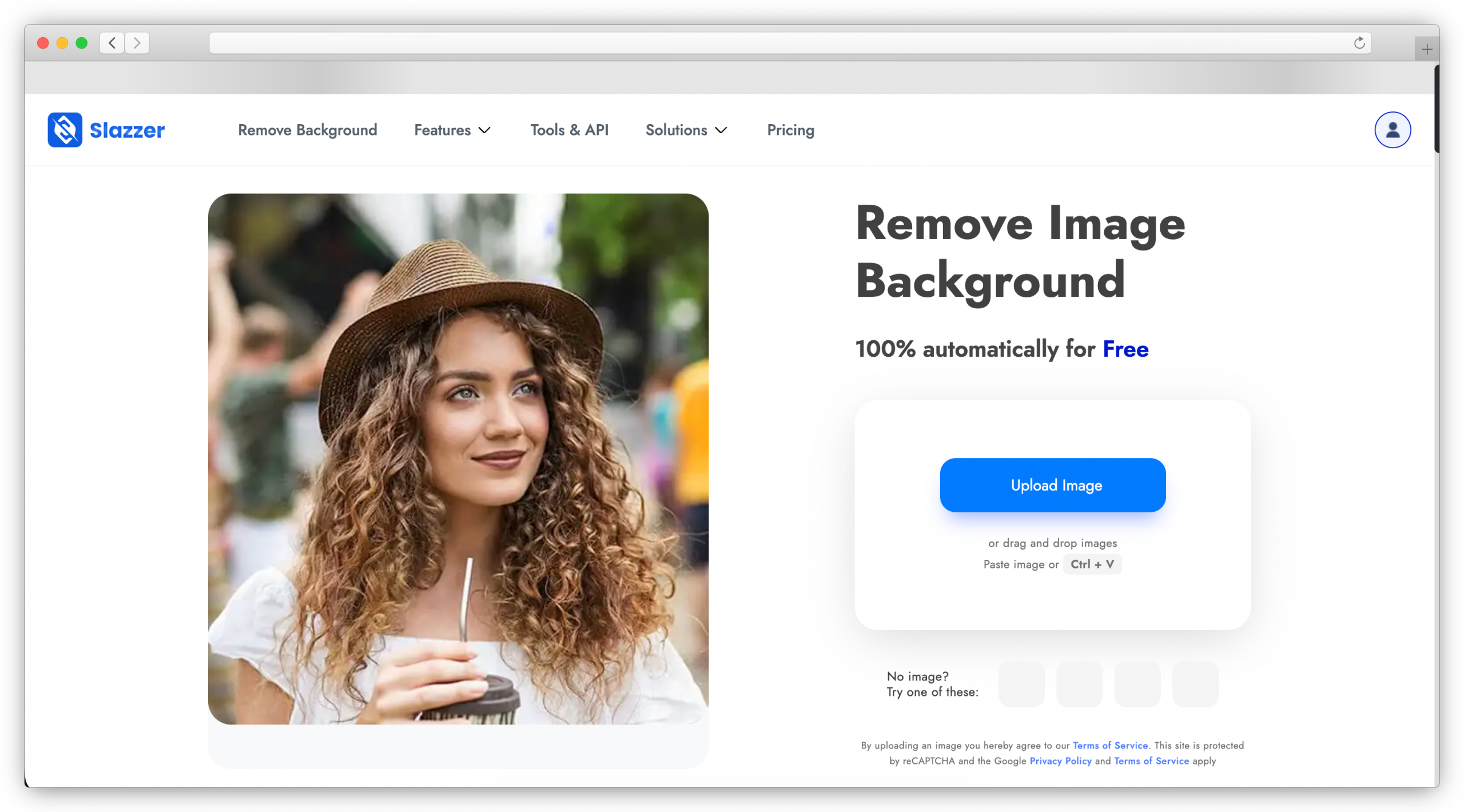
Before any fold can tell its story, the imagery itself needs to be pristine. This is where the preparation phase becomes critical.
Clean, focused visuals without distracting backgrounds allow each panel to breathe and communicate clearly. Tools like Slazzer help designers quickly isolate key subjects—products, portraits, or illustrated elements—by removing backgrounds in seconds.
This cleanup process ensures that when a viewer unfolds each panel, their attention stays exactly where the designer intended. A botanical café brochure, for instance, gains impact when individual flower illustrations or product shots stand cleanly against custom backgrounds that complement each fold’s reveal.
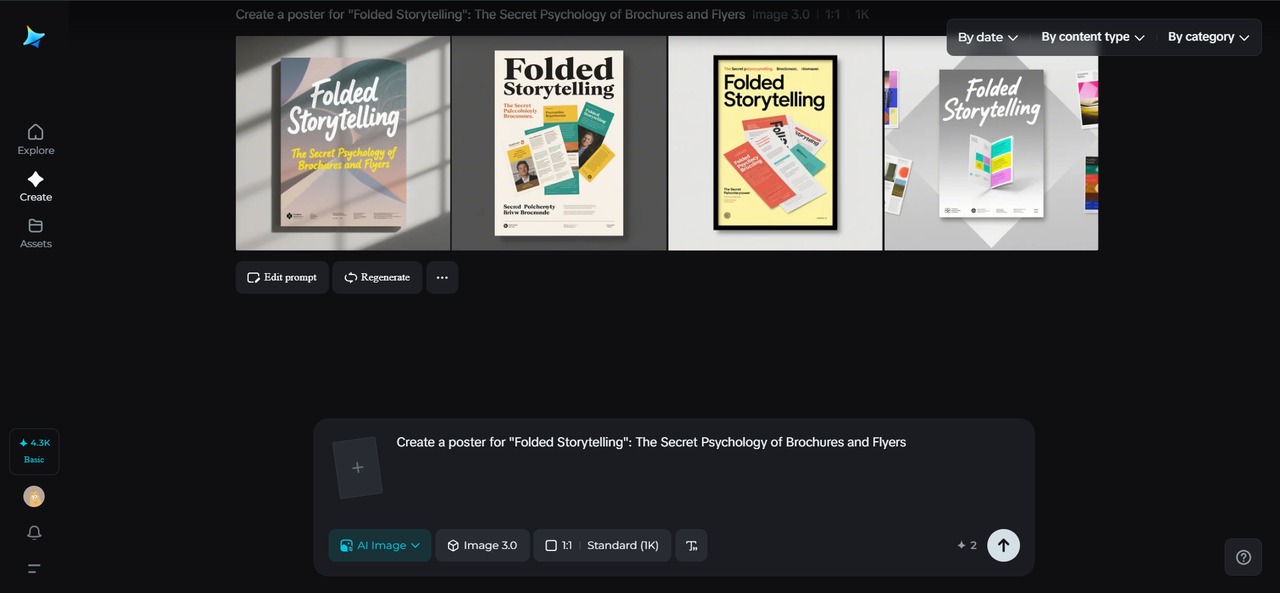
Let’s unfold the secret that is the psychology of these surface storytellers — and showcase a way to Dreamina helps design the next story-driven flyer worth opening.
How design reveals shape emotion
Design choices in how things reveal themselves really shape the emotions involved. The psychology behind folded design taps into deep sensory experiences. It goes beyond what the reader simply sees. It involves how they feel as they discover something new with each physical movement. That explains why effective flyers and brochures treat design like a form of choreography.
A skilled designer understands exactly where to build suspense and where to let it go. Hidden imagery tucked behind a fold sparks real intrigue. The reader feels compelled to look further. Gradual color shifts that span across panels make the unfolding process feel almost cinematic. Text layering works well too. A phrase that continues across folds mimics the steady momentum of a good story.
Now picture putting all this together using Dreamina. It generates storyboards and textures and visual concepts. Those elements unfold just like scenes from a short film.
Storytelling beyond paper
Storytelling extends far beyond just paper these days. Brochures and flyers have evolved past simple print materials. They now serve as portals to more engaging experiences. When adapted for screens, they become swipeable stories or motion flyers or animated reveals. These elements echo the tactile suspense found in physical folds. Designers craft digital folds through interactive layouts and scrolling effects and layered motion.
This approach highlights where Dreamina’s AI video generator steps in as a true ally for storytelling. It allows designers to animate transitions between panels. They can simulate opening sequences or add motion effects that imitate light gliding over glossy paper. The end result creates a piece that does more than inform. It actually performs for the audience. People today expect motion in just about every interaction.
The real beauty comes from connecting the old ways with the new ones. It preserves that slow, human rhythm of unfolding. At the same time, it adds the dynamic pulse that modern media demands.
Constructing your unfolding narrative with Dreamina
Creating a folded narrative is a process that engages both design and psychology. With Dreamina, you have the capacity to take visual creations that not only look good, but have the feel of wanting to be open. Here is a step-by-step process of how to begin thinking about how to establish your own ideas to tangible stories in Dreamina’s creative process:
Step 1: Write a text description
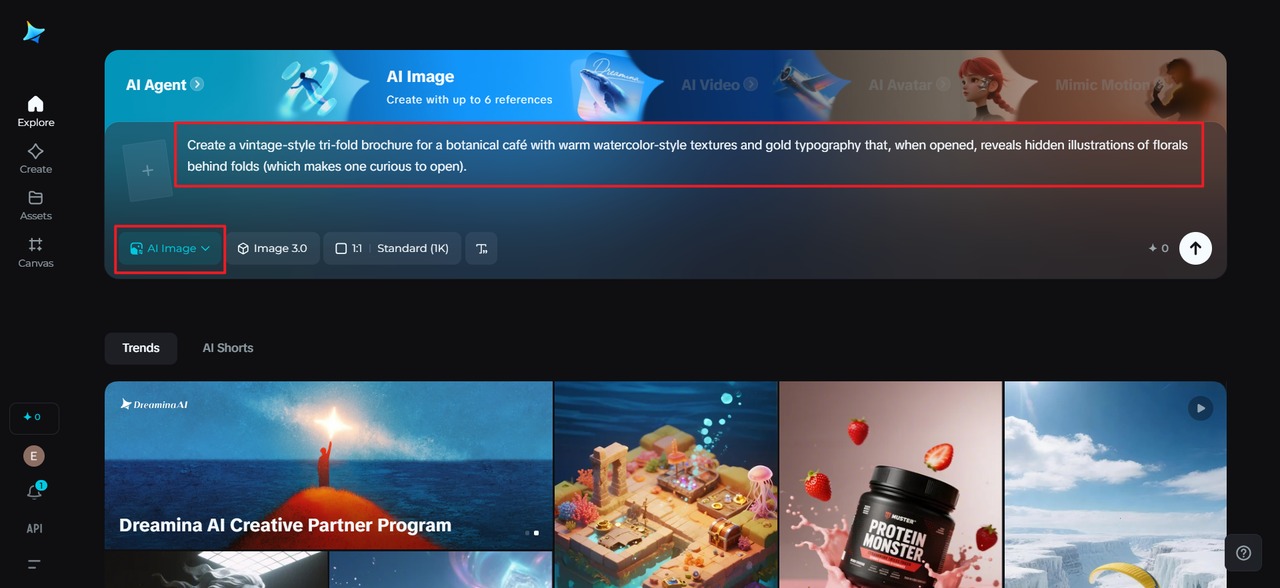
Start by heading to Dreamina and write a descriptive text prompt to detail the look and feel of the mood and reveal of your story. Consider each fold as one chapter.
For example: A vintage-style tri-fold brochure for a botanical café with warm watercolor-style textures and gold typography that, when opened, reveals hidden illustrations of florals behind folds (which makes one curious to open).
This text prompt is effective at conveying the aesthetic of your design as well as the emotional timing behind Dreamina — or the visual rhythm of unfolding.
Step 2: Fine-Tune & Generate
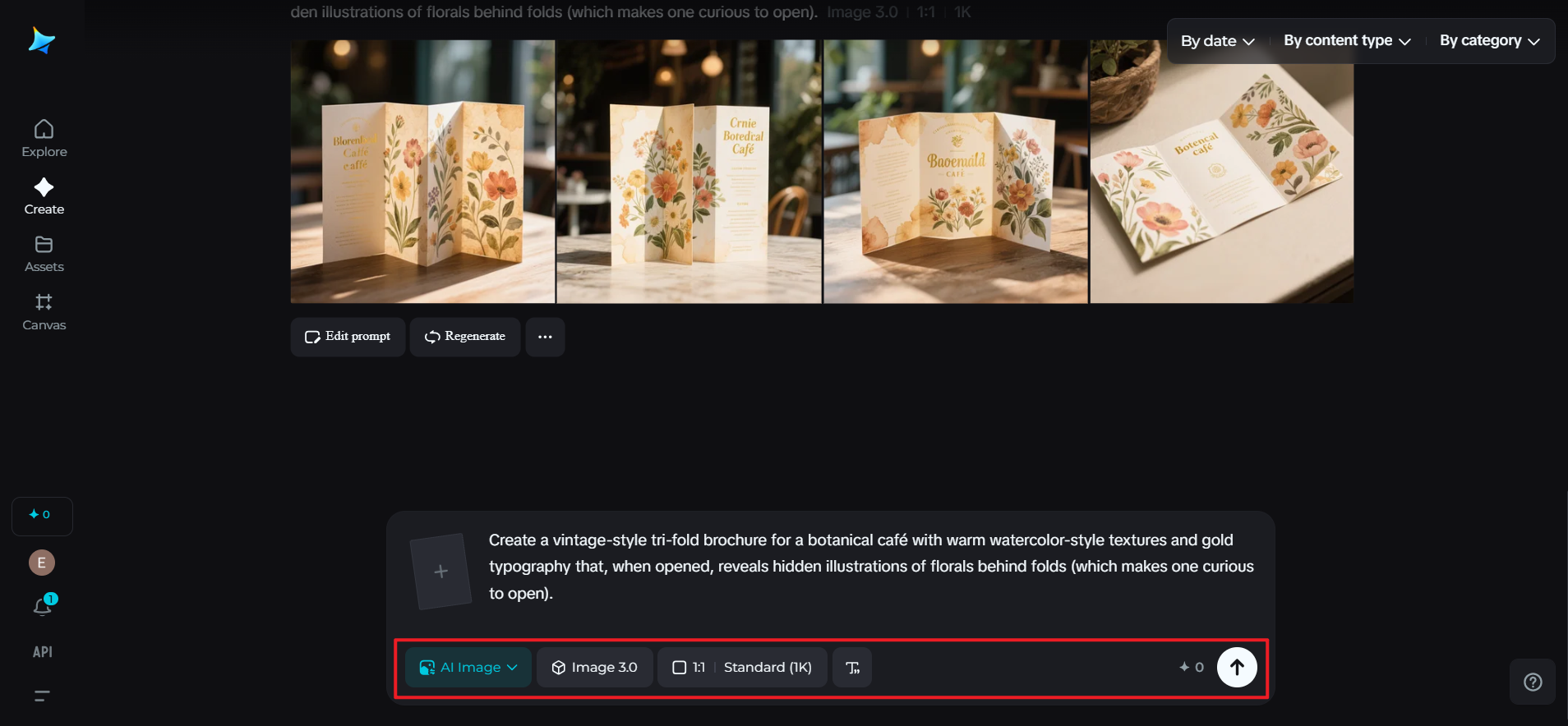
With your prompt in place for Dreamina, you can begin to fine-tune Dreamina’s settings. Select a model that best fits your vision, an aspect ratio that matches your format (i.e., 3:2 for a brochure or 1:1 for a flyer), and the size should align with a specific use case. Trimming would need to change format. Select 1k or 2k resolutions to help ensure textures behind folds or where folds were mapped remain clear. Finally, you click Dreamina’s icon to generate.
Step 3: Edit and download
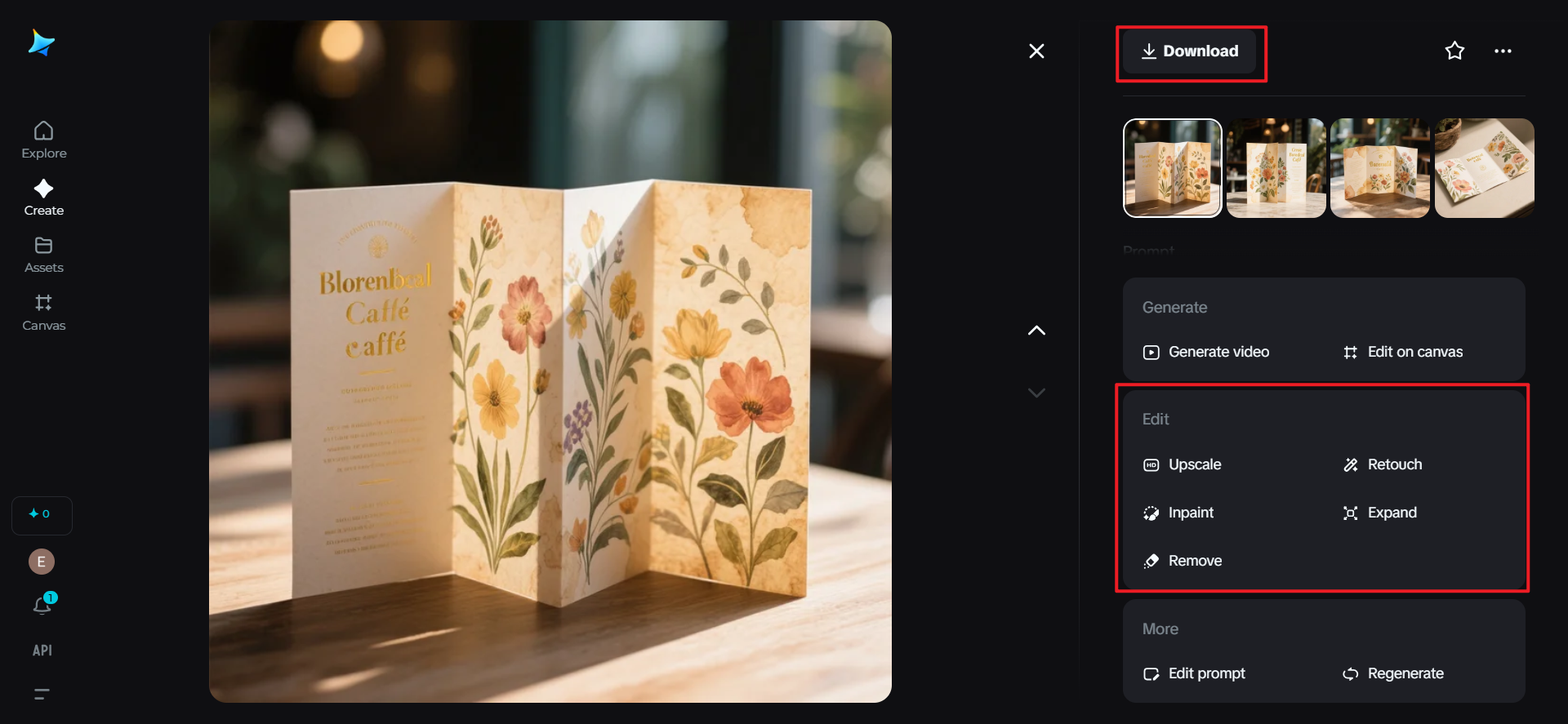
Refine your design using Dreamina’s customization tools. Use inpaint to enhance focal points or correct small imperfections, expand to extend the layout across new folds, remove to declutter distracting elements, and retouch to adjust balance or lighting. Once your folded narrative feels cohesive and polished, click the “Download” icon to save your finished visuals — ready for print, screen, or both.
Folds as memory triggers
The thing with folds goes beyond simple design work. It ties right into how our minds work. When folks handle a folded flyer or brochure, they end up remembering it through touch. Opening it up or flipping through pages builds that muscle memory. Your message sticks deeper this way than with any flat picture.
In the world of marketing, this builds a kind of emotional hold. It links movement to the core idea in someone’s head. Viewers do not just remember the words on the page. They recall the feeling of uncovering it step by step. Folded stories stay relevant over time, even when things go digital. They create a sense of shared interaction.
Tools like an AI art generator take this further. You can keep rethinking how people engage with it. Try out wild textures or stacked layers. Play with folds that push the limits of what a brochure really means. Design turns into a mix of skill, mind games, logic, and pure surprise.
Refining your visuals for maximum impact
As your folded narrative takes shape, the final details matter more than ever. Each element competing for attention needs to earn its place in the design. This is where refinement tools become essential to the workflow.
Whether you’re working with product photography, lifestyle imagery, or illustrated elements, clean composition makes the difference between a good design and one that truly captivates.
What Slazzer brings to the process:
- Remove cluttered backgrounds from product shots so they float elegantly across fold panels
- Extract portraits from busy settings so faces become focal points in testimonial sections
- Lift key objects from their original context and place them against gradients or textures that enhance rather than compete
This level of control ensures every visual serves the unfolding story. When backgrounds don’t distract, when elements breathe freely against their chosen backdrops, the choreography of the fold becomes clearer. The viewer’s eye follows the intended path without hesitation.
Conclusion: The quiet drama in every fold
A brochure serves more than basic marketing needs. It becomes a small performance space. Folds conceal parts of the story. Each one revealed feels like a plot turn. This setup draws out the process of finding out more. Design sparks interest and pays off for those who look closely.
Dreamina makes this folded narrative even stronger. Experiment with surfaces that catch light when they spread open. Build setups that change across panels. Use colors that move like shifting feelings. It works for printed pieces or digital displays. Dreamina ensures your images open up in ways that carry real weight.
The top flyers go beyond passing on facts. They share hidden details in a soft voice. When that final fold comes apart, people feel drawn to see even more.


Comments (0)